
How Blackstone Transformed Jersey Mike’s, Shared IPO with Employees
Later today, Jersey Mike moved from slinging subs to slinging shares publicly worth about $7 billion.

It’s been 51 years since 17-year-old Peter Cancro took out a loan to buy the Jersey Shore sandwich shop where he worked, and not even two years since Blackstone bought a controlling stake in the chain.
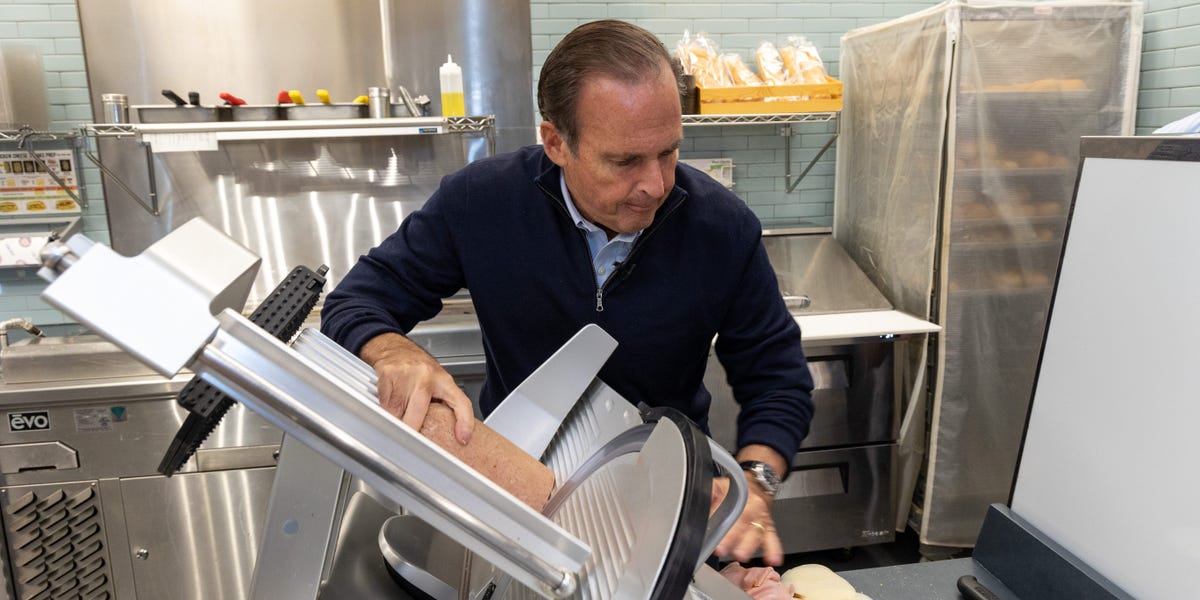
In that short time, the world’s largest private equity investor transformed the way the sandwich chain operated, bringing in professional outside managers, establishing a corporate board, and giving employees a stake in the business. It will be Blackstone’s public market debut of its new popular private equity profit-sharing strategy.
For that quick change, one thing the company hasn’t touched is the sandwiches themselves. In addition to new additions such as Hot Italian, it has kept the same portions and fresh deli meats. According to sources with direct knowledge of Jersey Mike’s operations, the restaurant’s suppliers have not changed since the acquisition.
Here’s what Blackstone has changed at the Jersey Shore sandwich shop, and what remains the same across its nearly 3,300 stores.
From shore to meeting room
During nearly five decades as Cancro’s sole owner and executive director, he grew one sandwich shop into a nationwide business, hiring family members and paying tens of millions of dollars.
Original Mike’s sub location in Point Pleasant, New Jersey. USA TODAY / Reuters Connect
Before he sold his majority stake to Blackstone for $8 billion in 2024, it still operated like a family business. As part of the deal, Cancro stepped down as CEO and became a board member. The deal gives Blackstone an 80% stake and the Abu Dhabi Investment Authority a 10% stake in the business, with Cancro’s stake reduced to 10%.
Cancro wrote in the company’s S-1 that he decided to sell to Blackstone because of the company’s strong experience in the franchise business, most famously with the highly profitable acquisition of Hilton.
Cancro was replaced as CEO by Charles Morrison, a longtime industry veteran who took Wingstop public in 2015 and was most recently CEO of Salad and Go.
The sandwich shop’s first board included Nigel Travis, former longtime CEO of Dunkin’, serving as chairman, Abercrombie & Fitch CEO Fran Horowitz, former AutoNation CEO Cheryl Miller, and three other Blackstone executives.
Rounding out the executive ranks are a series of new hires, including Michele Allen, former CFO of Wyndham Hotels & Resorts, at CFO, and Stacy Peterson, former CEO of Jeni’s Ice Cream, at COO.
Spread the wealth
With this IPO, Blackstone is doubling down on the idea that executives and workers who are motivated to see a company doing well are more likely to stay and do their best work.
It offers a shared ownership plan in the form of bonuses to the company’s employees, who work out of Lumon’s real-life headquarters in suburban New Jersey. Blackstone announced in 2024 that all future US private equity contracts will include these programs, which have become widespread in the industry.
David Paul Morris/Bloomberg via Getty Images
Jersey Mike’s bonus will be funded by Blackstone’s own payout, can be in cash or equity, and can range from 0% to 200% of the employee’s eligible compensation. The final payment is based on Blackstone’s return on its original investment and can also be assessed by employee tenure at the company.
Direct employees who do not participate in other equity incentive programs – and have been with the company for at least one year when Blackstone was not in control of the company – will receive the payment. Franchisees, their sandwich workers, and company store employees are not eligible for the Ownership Plan.
As a standard practice, executives will also receive stock funds, aligning their interests with the company’s investors.
This will be Blackstone’s first time bringing these extensive ownership plans to the public. Other examples of IPOs related to one of these plans come from the issuers that own KKR Industries: Gardner Denver, now Ingersoll Rand, and Lineage Logistics. Jersey Mike’s filing is unique in that it reveals the nuts and bolts of how their plan will work.
But it’s smaller than other examples: Jersey Mike’s had 293 corporate employees at the end of last year, while Lineage Logistics said it has given equity to more than 28,000 employees since 2017. Blackstone-owned Copeland, which filed privately for an IPO late last year, has 18,000 shareholder interests.
The bigger the subdivision, the bigger the business
Growth remains central to Blackstone’s investment philosophy. The total number of stores is up only about 8.4% from when Blackstone bought the chain. The company is likely to double Jersey Mike’s franchisee development pipeline of 1,600 potential new stores, 90% of them from existing franchise owners.
Jersey Mike’s franchise owner. USA TODAY / Reuters Connect
Jersey Mike’s is now making its first cross-continental leap to the UK and Ireland, with Peter Cancro signing a master deal to open up to 300 stores in Ireland. It was already launched in Canada the year Blackstone bought it.
Blackstone also used its financial efforts to help Jersey Mike refinance many of its debts earlier this year in $ 760 million in all securities business. This has resulted in higher debt levels compared to franchised peers, even though the company’s profit margins are generally better, according to Wall Street research firm Gordon Haskett.
The clearest sign that expansion is a long-term plan is the specifics of the deal. Blackstone may have taken Jersey Mike’s public less than two years after buying it, but it’s operating at roughly the same value it paid. That means Blackstone will hold its shares for a while, waiting for its plan to pay off. Blackstone has historically held shares of IPOed companies for years after the transaction, including Hilton, which it held for more than four years after the IPO.
They are, of course, recouping some of their costs. For one, recent debt increases include dividends for Blackstone, and the company is selling the lion’s share of the IPO offering, more than 26 million shares. However, it will retain approximately two-thirds of the company’s voting power. The IPO will also issue nearly 14 million new shares.
In other words, they are going to be in the driver’s seat for a while. And with future projections of 7,500 US restaurants and 15,000 worldwide, that could be a very lucrative position.