
Manipal Health Enterprises Ltd on Tuesday raised ₹4,167 crore from anchor investors ahead of its…
Shein’s long-awaited IPO only got harder to sell when tariffs bite
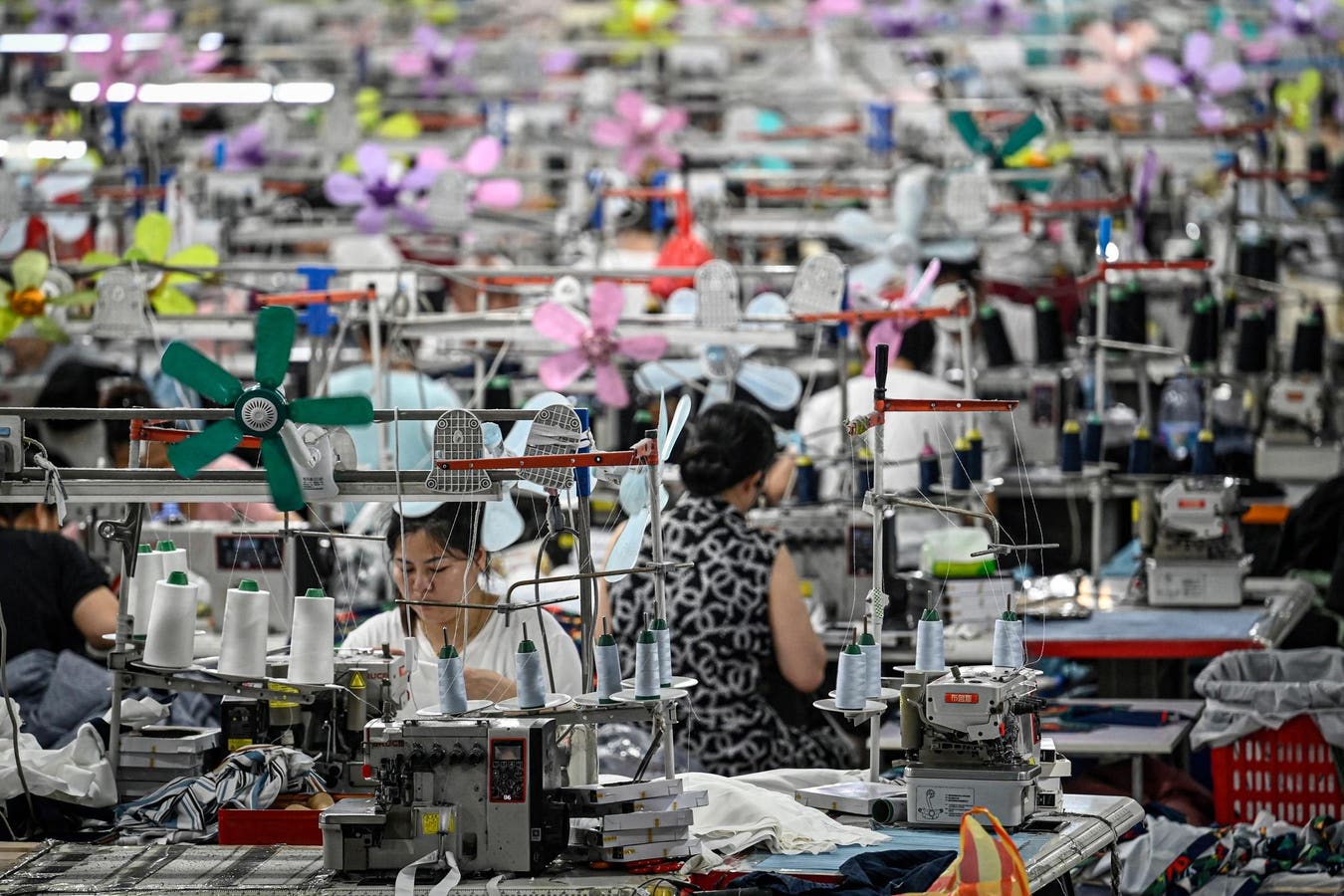
Workers make clothes at a garment factory that supplies clothes to fashion e-commerce company Shein in Guangzhou, south China’s Guangdong Province. (Photo by Jade GAO/AFP via Getty Images)
AFP via Getty Images

Shein has spent better than three years tracking stock market listings, first in New York, then in London and now, finally, in Hong Kong. But figures it revealed to prospective investors this week suggest the pitch has gotten much tougher.

The fast fashion giant posted a $99 million loss in the first quarter of 2026, a sharp reversal from the same period last year. The figures, revealed in a draft prospectus filed with the Hong Kong Stock Exchange as part of its long-awaited initial public offering, are the clearest signs yet that tariffs and regulations are landing on Shein’s bottom line.

Part of the loss was one investment, a non-cash book value of $328 million related to the fair value treatment of convertible preferred stock, a technical adjustment that converts investor stock into common stock when the company is listed.
What may be of more concern to investors is that Shein’s US revenue fell 14.3% year-on-year to about $2 billion, as the Trump administration canceled de minimis import exemptions in May 2025, eliminating a loophole that allowed low-value parcels to enter America without tax exemptions.
Eliminating the exemption not only increased Shein’s costs, it undermined the company’s core business model, which depends on delivering very low-cost products directly to individual consumers. The United States, which accounted for 29.4% of Shein’s recent annual revenue in 2023, fell to 22.5% of quarterly sales. Its operating margin fell to 2.9% from 3.9% a year earlier, as marketing and operating expenses rose while sales stagnated.
Shein is now weighing a US price hike to offset the added tax but that’s a move that risks undermining its price advantage.
European rules are still enforced
And if the pressure of the United States was not enough, Shein flagged that Europe, about a third of its annual revenue, could have a similar or even greater impact after the European Union introduced a charge equal to about $ 3.50 for low-value e-commerce parcels this month, as part of a broader push by Brussels to close what it considers consumers to benefit directly from unfair shipping.
Shein’s own filing warned that disruptions in Europe could “match or exceed” what it experienced in the United States.
Zoom out, and the full picture is sobering. Shein’s net profit in 2025 is down 38.7%, to about $2.06 billion, even though revenue is up 8% to $37.1 billion, down significantly from 20.7% sales growth in 2024.
Meanwhile, Mr. Shein cleared the biggest remaining hurdle on July 10, when he received approval from the China Securities Regulatory Commission for a Hong Kong listing, targeting September or October this year. It is expected to raise about 3 billion US dollars worth of 40 billion to 50 billion US dollars.
Shein’s valuation has fallen since the last funding round. (Photo by Piero CRUCIATTI/AFP) (Photo by PIERO CRUCIATTI/AFP via Getty Images)
AFP via Getty Images
That’s less than the $98.2 billion it ordered in the 2022 funding round, and even the $64 billion it was assigned in the next round in 2024. And there are reports that some investors have pushed for a further reduction in value to about 30 billion US dollars.
That repricing tells its own story. Shein’s IPO has now been rerouted three times, abandoned in New York amid US political scrutiny over supply chains and labor practices, stalled in London after regulations and reputations, and finally transferred to Hong Kong, where Beijing’s support offers a smoother, if smaller, route to the market.
Backers including Sequoia China, Tiger Global, General Atlantic and IDG Capital stood by their first real liquidity event, whatever the final price.
Analysts warn of further decline
But some analysts are openly skeptical that Shein can command popularity, or even hold its ground once it goes public. Shen Meng, a director at Beijing-based investment bank Chanson & Co, said he doubted Shein would achieve a meaningful increase in value in the Hong Kong IPO or in the secondary market compared to previous private equity rounds, arguing that the retailer would have been better off if it had completed a London or New York listing earlier.
Tony Huang of Deloitte’s China Capital Markets Services Group was more optimistic in a June note, pointing out that easing Middle East tensions and the opening of the Strait of Hormuz could give Hong Kong listings, including Shein’s, a headwind. But even that comes with the recognition that Shein’s own operational and geopolitical challenges remain very much a deciding factor in how investors ultimately settle on a price.
According to the filing, the proceeds from the listing will fund technology investments, including AI for demand forecasting, along with international expansion, Branding and corporate responsibility initiatives Shein.
Mr. Shein is pushing ahead with a plan to pump about 1.5 billion US dollars into the development of Guangdong’s freight hub to improve operational efficiency at a time when cross-border freight costs have become the biggest headache.
Related Articles
The opinions and investment advice provided by experts on ipogmp.org are solely their own and do not reflect the views of the website or its management. Ipogmp.org recommends that users consult with certified professionals before making any investment decisions. *Please note that advisory services mentioned on Ipogmp.org are not currently operational and are proposed services awaiting SEBI registration.Related Posts





This Post Has 0 Comments